How They Work Together
The three pieces form a short, one-directional pipeline with the dataset at the center:
- A data capture job writes captured website content into a memory dataset.
- The dataset stores and indexes it, making it searchable.
- An assistant reads from the dataset to answer questions.
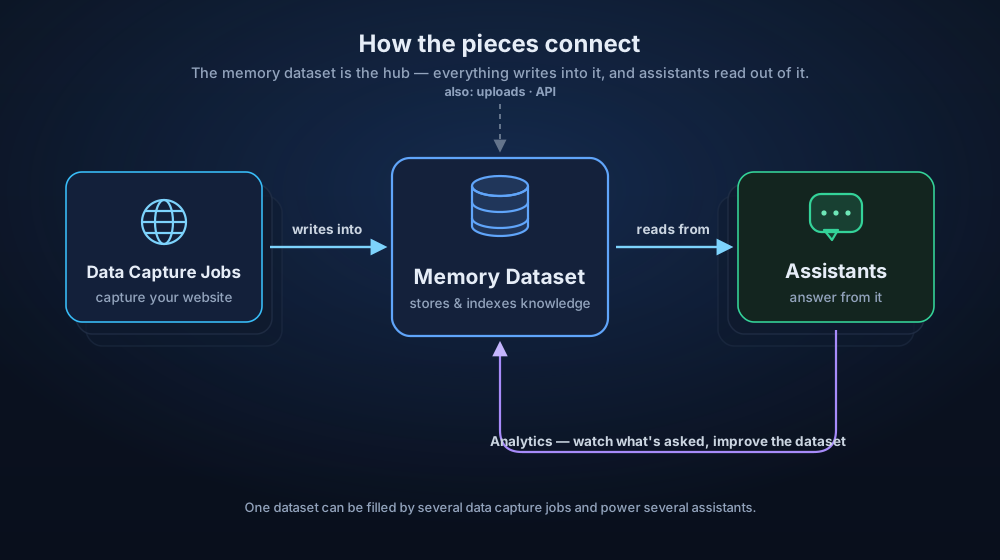
The dataset is the hub, and the relationships fan out on each side: one dataset can be filled by several data capture jobs (and uploads, and the API), and the same dataset can power several assistants. Change the knowledge once, in the dataset, and every assistant connected to it improves at the same moment.
Because the data capture job and the assistant only ever talk through the dataset, they stay independent — you can re-run a capture to refresh content without touching the assistant, and re-tune the assistant without re-capturing.
The Loop, End to End
The pipeline really becomes a loop once an assistant is live and you start listening to it:
- A data capture job fills the dataset from your help center.
- The assistant answers visitors, grounded in that content.
- Analytics shows a question people keep asking that it answers poorly.
- You add the missing content to the dataset (or re-capture the page that changed).
- The very next visitor gets a solid answer.
That feedback loop — watch what's asked, close the gap in the dataset — is how a good assistant gets better over time, without ever rebuilding it.