How an ecommerce AI chatbot answers product questions
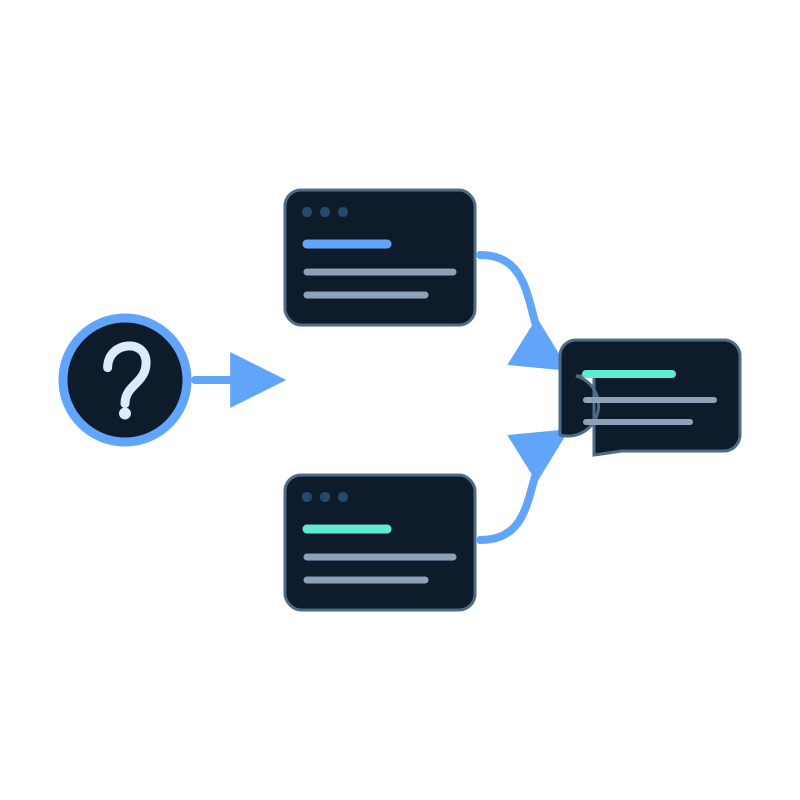
An ecommerce AI chatbot should answer from product and policy content selected by the store, not from a general guess about the item.
The workflow has four parts: capture the source, retrieve relevant passages, generate an answer within those passages, and show where the facts came from.
Follow one question through the system
Consider: "Can I use this pump with a 16-bar food-processing line?"
- The product page must state pressure and intended use.
- The page must be captured and processed into the dataset.
- Retrieval must select the matching specification rather than a similar model.
- The answer must preserve the 16-bar qualifier and any configuration condition.
- The citation must open the product page containing those facts.
If the page lists pressure but not compatibility with the shopper's exact system, the answer should distinguish the published fact from the missing decision.
Product questions need different source types
| Question | Best source |
|---|---|
| Size, material, or technical limit | Product detail or specification sheet |
| Product comparison | Current pages for each product |
| Return eligibility | Store policy |
| Shipping condition | Delivery policy |
| Installation | Current manual or guide |
| Order status | Account or order system, not public catalog content |
A public website assistant can cover the first five when the sources are available. It should not pretend to know the sixth.
Preserve variants and qualifiers
Test products with sizes, colors, pack quantities, regional offers, sale prices, and "from" pricing. An answer that combines a base product's description with a different variant's price is unsupported even if both facts appear on the page.
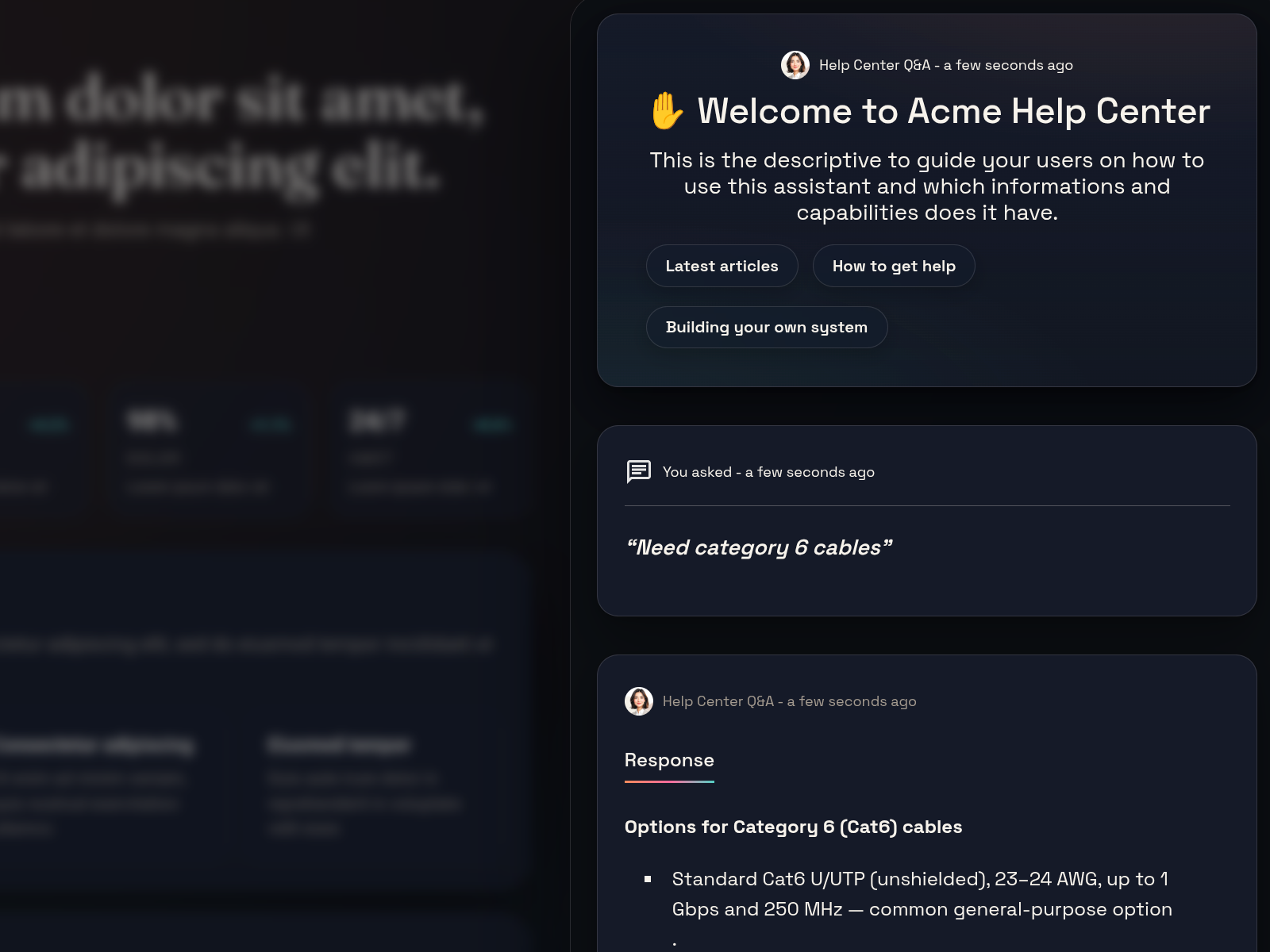
Open the citation and check that the exact variant or condition appears there.
Define missing-information behavior
When the selected sources do not state a product fact, the chatbot should say so and point to the relevant product page or contact path. A short limitation is more useful than a confident invented specification.
Keep a regression set for the store's most important questions and rerun it after catalog or policy changes.