Multi-document AI search

Searching many files is useful when a question spans a handbook, policy, price list, and setup guide. It becomes risky when the files describe different audiences, dates, or versions without making those boundaries clear.
The work is not simply uploading more documents. It is building a collection in which sources can be combined safely.
Decide which files belong together
Group documents by the questions they are allowed to answer.
| Collection | Include | Keep separate |
|---|---|---|
| Public product information | Current product guides, public pricing, public policies | Internal roadmaps and customer records |
| Staff procedures | Approved internal manuals and process notes | Public marketing pages unless needed |
| Regional policies | Files for one jurisdiction and effective period | Rules from another region without clear labels |
| Technical manuals | Current manuals for compatible product versions | Superseded editions |
A memory dataset can contain several files and website captures. That flexibility makes the collection boundary important.
Add identifiers before upload
Use filenames and document headings that include product, region, edition, or effective date where relevant. If two files both say "Returns policy" but apply to different countries, the distinction should be visible in the source itself.
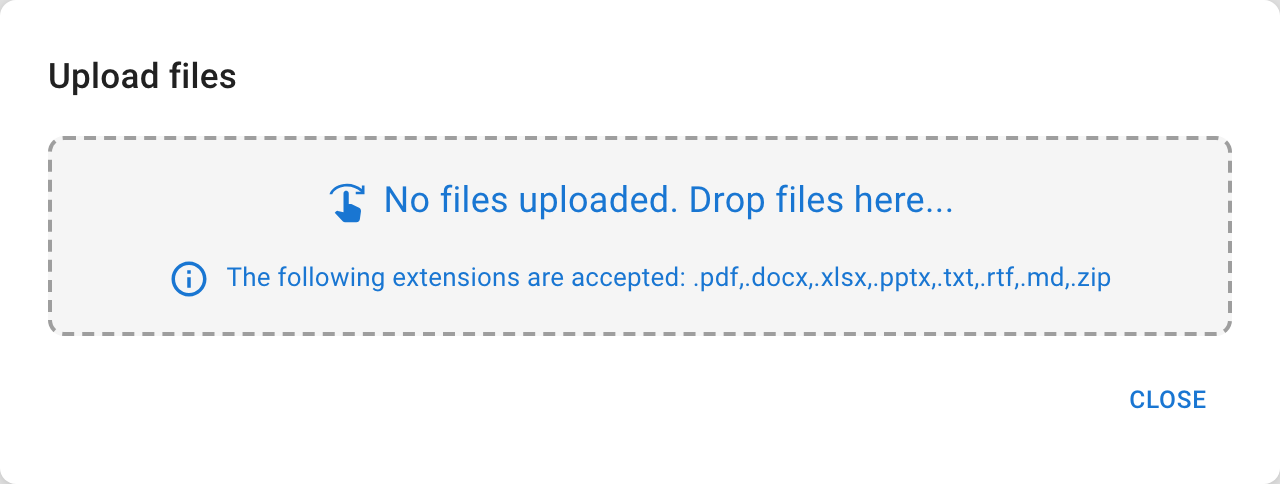
Upload the files and wait for each one to process.
Test three retrieval patterns
One-document question
Ask for a fact stated in one file. Verify that the answer cites that document rather than a loosely related source.
Cross-document question
Ask a question that genuinely requires two compatible documents. The answer should preserve which fact came from which source and link to both when needed.
Conflict question
Create a controlled test with two sources that disagree. The desired behavior may be to state the conflict, prefer a clearly designated current source, or decline to choose. Decide that rule before launch.
Review the dataset, not only the answer
Search the dataset contents for old titles, duplicate files, and known obsolete wording.
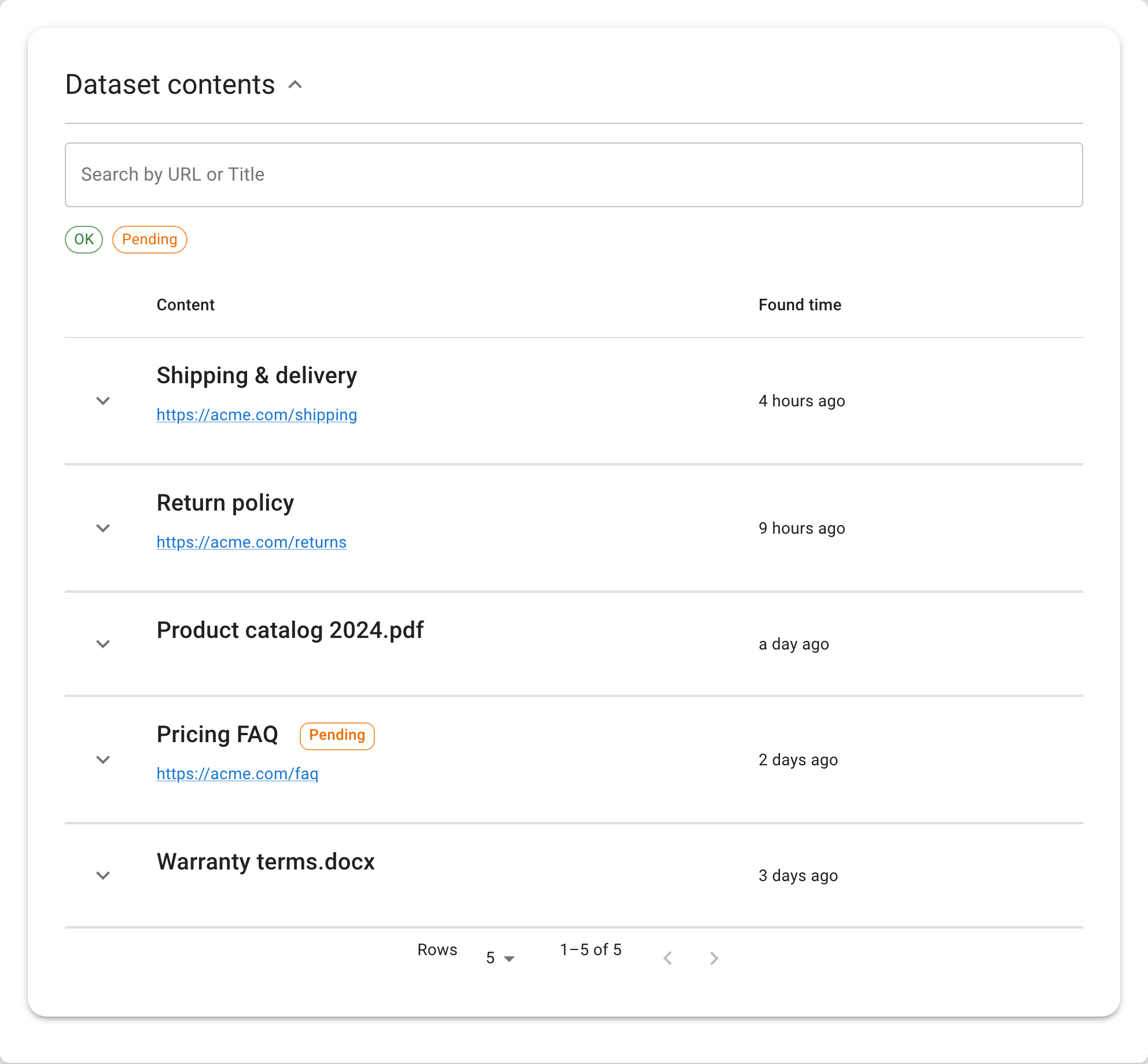
When a new edition arrives, remove or isolate the old one before relying on the new answers. Adding a current document without managing the previous version can make retrieval less predictable.
When to split a dataset
Use separate datasets when source access differs, the same question has audience-specific answers, regional rules must not mix, or independent teams own the content.
Multi-document AI search works best when each dataset represents a coherent answer boundary, not every file the organization owns.