Reduce hallucinations in a website AI assistant
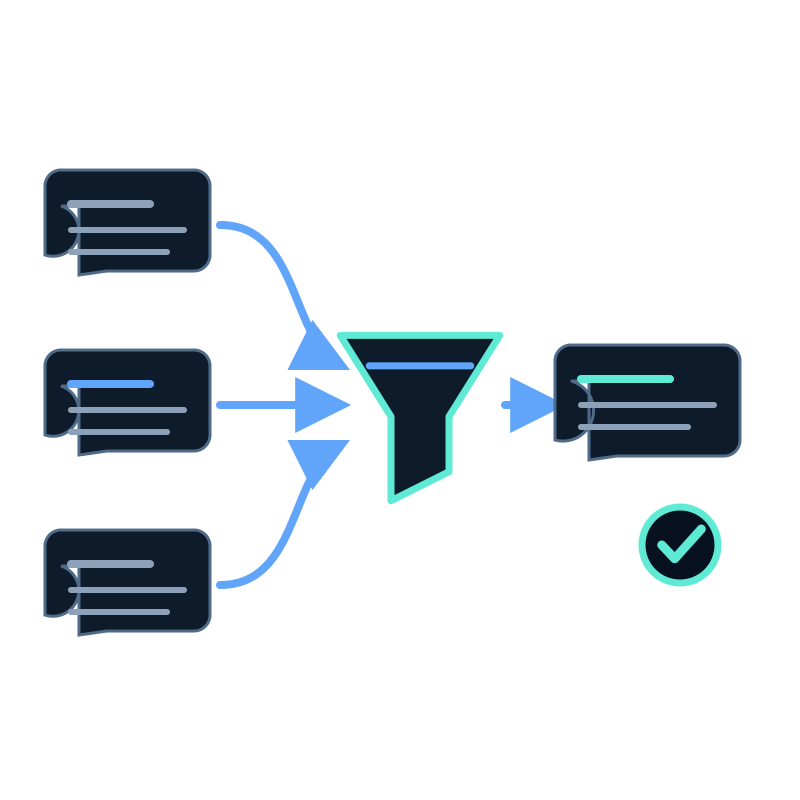
An unsupported answer can enter at several points. The source may be missing, retrieval may select the wrong page, two pages may conflict, or the response may add a claim that the passages do not support.
Treat "hallucination" as a diagnosis to investigate, not a single setting to switch off.
Classify the failure
| Failure | Evidence | Appropriate fix |
|---|---|---|
| Missing source | Dataset search finds no supporting text | Add or improve the authoritative page |
| Stale source | Dataset contains an older version | Refresh or replace the source |
| Conflicting sources | Two indexed pages state different facts | Resolve or exclude the obsolete source |
| Retrieval miss | Correct source exists but is not selected | Improve scope, content wording, tags, or retrieval settings |
| Unsupported synthesis | Source cards appear but do not support the claim | Tighten response rules and fallback behavior |
| Question outside scope | No approved source should answer it | Decline and provide the right next step |
Do not start by rewriting the prompt when the source is absent.
Keep the dataset focused
Remove duplicate, private, irrelevant, and obsolete material. Use included and excluded paths so a public website capture does not collect account pages, old campaigns, and archive copies.
For small curated datasets, Seekdown can use full dataset contents as context. For larger datasets, the default search mode retrieves matching content. The documented default maximum is 10 results; changing it can broaden or focus the context, but it should be tested against a question set.
Make sources visible during review
Keep Show highlighted results enabled while testing so each answer displays its reference cards.
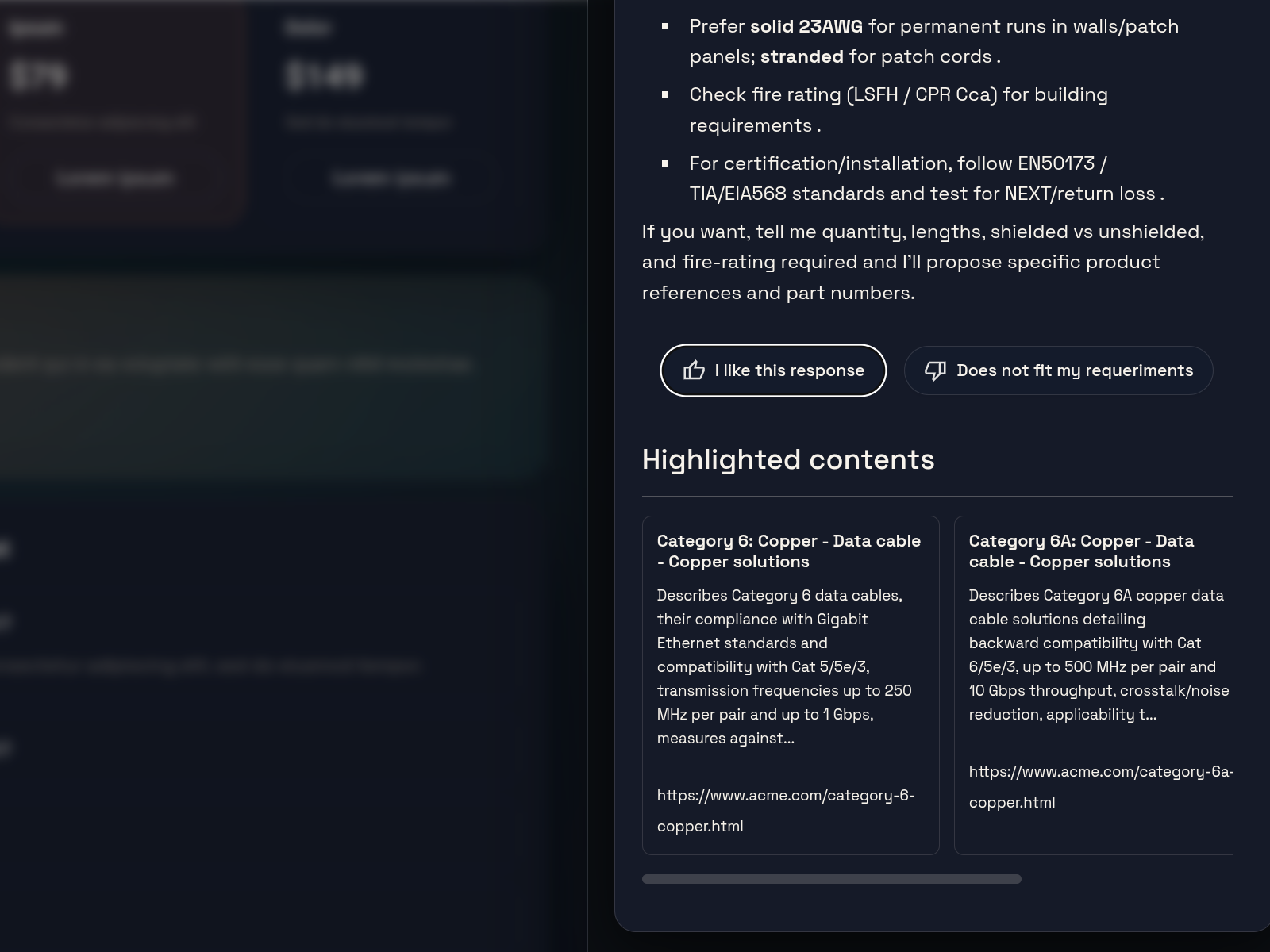
For every material claim, open the cited source and locate the supporting text. A citation is diagnostic evidence only when it actually supports the answer.
Define a careful fallback
State what the assistant should do when the selected sources do not answer a question. Suitable behavior may be to say the information is unavailable, ask for clarifying context, link to a relevant page, or direct the visitor to a person.
Avoid instructions that reward answering every question. Completeness is not useful when the source is silent.
Maintain a regression set
Include known facts, cross-page questions, ambiguous wording, source conflicts, and unsupported requests. Record the expected source and prohibited claims.
Re-run that set after changes to source content, capture scope, dataset connections, retrieval settings, or response instructions. The goal is not a promise of zero hallucinations; it is a controlled process that finds and reduces unsupported answers.